Is Greece too seismic for nuclear power?
Seismicity does not settle the question for a whole country. It sets a design requirement for each site, measured in the field over years, which a design either meets with margin or does not.
The question is not whether Greece has earthquakes
The question is usually asked as if seismicity were a switch, on or off, for an entire country. It does not work that way. Seismic action is a load, and loads are measured, specified and designed for. Countries with high seismicity operate nuclear power plants today, which on its own disposes of the general form of the question.
The discussion moves from the country to a specific site, and to cost. Each site has its own seismic demand, which the design must cover with margin, and that demand can change over short distances because it depends on the earthquake sources nearby and on the ground beneath.
The useful question is what a given site requires, whether a design can meet that with a margin an independent regulator will accept, and what that costs in money and time. A site being dropped along the way is a normal outcome.
How a site is assessed for earthquakes
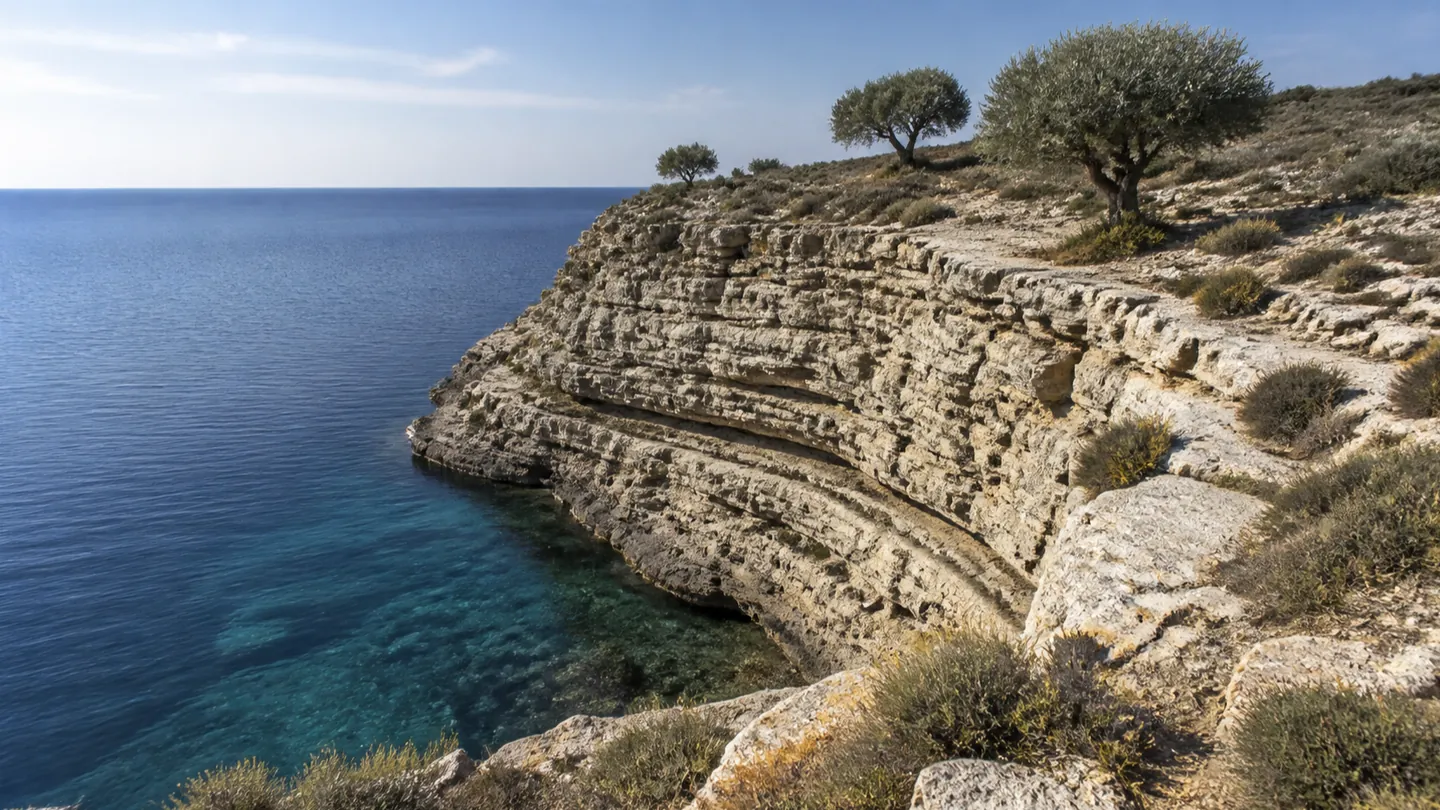
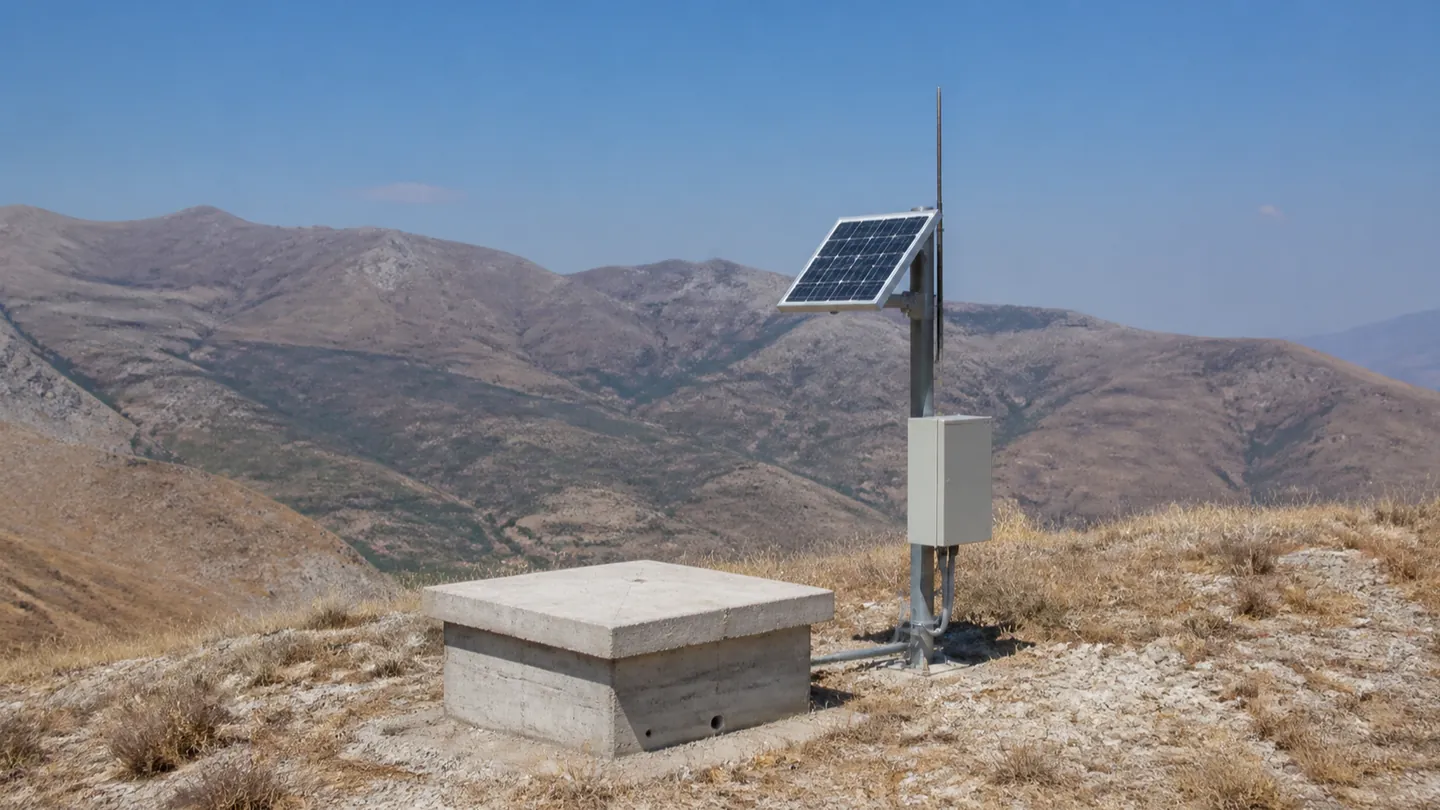
Seismic assessment of a site is a measurement programme that runs over years, not a desk opinion. It starts by mapping the earthquake sources around the site: active faults, their geometry and slip rates, and the historical and instrumental earthquake record. It involves fieldwork, fault trenching and, where sources lie offshore, marine surveys.
Then the ground itself is examined: its layering, stiffness with depth, seismic wave velocities, liquefaction potential, slope stability and soft layers that can amplify certain frequencies. Neighbouring sites exposed to the same sources can end up with quite different requirements if one sits on rock and the other on soft deposits.
Sources and ground together give the seismic hazard: what motion to expect, with what probability, at which frequencies. A probabilistic assessment and a deterministic review of adverse scenarios usually run in parallel, and the design requirement comes from combining them. Secondary effects are examined too: surface rupture, landslides, subsidence and tsunami.
Some findings cannot be designed around. A fault capable of displacing the ground surface beneath safety-critical buildings ends the assessment of that site. All of this work goes to an independent regulator, which reviews it, can ask for more investigation and can reject it. Where Greece’s regulatory capacity stands is covered in our article on the EEAE.
Design basis and margin
The output of the assessment is not a prediction of the next earthquake. It is a specification: a curve of ground motion by frequency which buildings, equipment and piping must withstand without losing their function. The design earthquake comes from a hazard analysis at a very low probability of being exceeded, with margins for what is still unknown about the sources.
Margin is the most misunderstood layer. A structure designed for a given demand does not collapse the moment actual motion exceeds it, because conservative codes, materials and detailing give real capacity well above the specification. Current practice assesses that margin separately, asking how far beyond the design basis the critical safety functions hold.
Margin also covers knowledge that did not exist when the site was studied. A previously unknown fault is identified, the earthquake catalogue is revised, models improve. Existing plants are then reassessed against the new hazard and may need upgrades, or may not be allowed to restart. That is part of the cost and risk of the choice.
Ground motion, damage and seismic design
Public discussion tends to treat how hard the ground shook and what broke as the same thing. The first is a property of the site; the second is a property of the structure and how it responds to that motion.
Peak acceleration is only part of it. Frequency content, duration and the number of strong cycles matter, and above all whether the dominant frequencies fall close to the structure’s natural frequencies. A tall, flexible building and a low, heavily reinforced one on a common slab respond very differently to the same input. Reactor and safety-system buildings belong to the second kind by design.
So the criterion is whether the safety functions held: the chain reaction stopped, heat continued to be removed, and the containment stayed leak-tight. A plant can ride through a strong earthquake, take damage to non-critical parts and keep those functions. Equally, a small failure in the wrong place counts for more than heavy damage somewhere that does not matter.
Design starts with the foundation. Safety-critical buildings rest on competent ground, often on a single thick base slab that makes them move as one body, so differential movement does not tear apart the connections between them. Some designs add seismic isolation bearings between foundation and superstructure, filtering out the frequencies that load the structure most. Isolation can let a design already licensed elsewhere be adapted to a more demanding site rather than redesigned.
Equipment has to be qualified, not just installed. Pumps, valves, control panels, diesel generator sets and batteries are tested on shake tables, and the pass criterion is that they still work afterwards, not merely that they stay standing. Piping and cable routes get supports calculated for dynamic loads, and anchorages are checked as carefully as the structural frame. In real earthquakes it is often the small items that fail, such as an untied tank.
In many plants (in Japan, for example) automatic seismic shutdown does not wait for an operator: sensors on site insert the control rods once motion passes a threshold, and the chain reaction stops almost at once. That is the easy part. The hard part is the following hour and day, because the core keeps producing decay heat that falls over time but never reaches zero, and must be removed continuously for a long period.
In some Gen III+ designs part of this cooling works passively, by gravity and natural circulation, without electrical power, for an extended period. That reduces dependence on machinery that must start right after the shaking, without removing it: at some point cooling passes back to active systems, and those must have survived. What has to remain available after the shaking includes:
- electrical power that does not depend on the grid
- cooling water and an ultimate heat sink
- instruments and readings that show the plant’s actual condition
- access and workable conditions for staff
- independent routes, physically separated, that would fail in different ways
Fukushima: the earthquake was not the decisive factor
The operating units detected the earthquake and shut down automatically. The shaking alone did not breach the core or defeat the shutdown. The problem came afterwards. The earthquake had cut the off-site power supply, and the tsunami that followed flooded the site, knocking out emergency diesel generators, switchgear and the seawater pumps that served as the ultimate heat sink. Units 1 to 5 lost all AC power; only Unit 6’s air-cooled diesel generator survived.
Without power and without a heat sink, the decay heat had nowhere to go. The fuel overheated, water levels fell, the metal cladding of the fuel rods reacted with steam to produce hydrogen, the cores were damaged and containment integrity was lost.
The lessons followed directly: combinations of natural hazards matter more than each one alone; backup power and cooling routes must survive the second event as well as the first; a plant must remove heat for a long time without outside help; and units on one site can obstruct one another when hit together. These have since been written into requirements and backfits internationally.
Designs differ. Chernobyl’s RBMK, the boiling-water reactors of that generation at Fukushima and the Gen III and Gen III+ designs being built today differ in their physics and their lines of defence. None is invulnerable. The accurate formulation is lower probability and lower consequence of a severe accident, not zero. Estimates of deaths and health effects from past accidents vary substantially between studies and are not given here.
Seismic countries that run nuclear plants
Japan is the obvious case: high seismicity, plants that have experienced strong earthquakes and shut down as designed, and a regulatory framework rebuilt after Fukushima that put its units through reassessment. A plant also operates on the seismically active coast of California.
The lesson is not that nothing can go wrong. Seismicity is treated as an engineering parameter with a cost, and the answer can be negative for a site or a particular plant. Units have closed after their seismic hazard was reassessed.
For a country with no existing programme the comparison has limits. Those countries have institutions, specialist staff, supply chains and regulatory experience built up over decades. The engineering side of seismicity can be answered; the institutional side is a separate and heavier question, discussed in Can Greece support a nuclear programme?
What seismicity costs, and where the decision is made
The cost appears in several places: the investigation programme, which runs for years before any decision; the design, with more concrete and steel, isolation systems, tougher equipment qualification and more redundant routes; and licensing, because every departure from a standard design needs its own analysis and review, and so more time.
This is where the real economic risk sits. A new plant gets cheaper when a design already built and licensed elsewhere is repeated, and every site-specific modification erodes that advantage. The practical question is whether a site exists where the seismic requirement can be met by an already-licensed design with limited adaptation, or whether a plant tailored to the site would be needed.
Siting weighs many criteria at once, and seismicity is one. Cooling water, ground stability, distance from population, grid connection and strength, heavy-component transport, available land, the environment and local acceptance all count. A site can pass the seismic screen and fail on something else, or the reverse. This article does not assess, rank or suggest any location in Greece.
Nuclear power is discussed as a low-emission, dispatchable source, not as a renewable or ‘green’ one, and the EU Taxonomy includes it only under strict conditions. Seismicity does not end that discussion. It adds a price, a timescale and one condition: the answer is given site by site, from measurements, and it can be no. Where the policy process stands is set out in Where Greece stands.
Frequently asked questions
Can an earthquake cause a nuclear explosion at a power plant?
No. A strong earthquake leads to shutdown of the chain reaction, automatically where the plant has a seismic trip, and the physics of power reactor fuel does not allow a weapon-type explosion. The real risk is losing cooling after shutdown. The explosions seen at Fukushima were chemical, caused by hydrogen produced when the metal cladding of the fuel rods reacted with steam at high temperature.
What happens if the seismic hazard estimate changes after a plant is built?
The plant is reassessed against the new hazard picture. Depending on the result, upgrades and backfits may be required, extra operating conditions imposed, or the unit may not be allowed to run again. That cost and risk falls on the operator for the whole life of the plant and belongs in the original economic case.
Can a site be rejected purely on seismic grounds?
Yes. A fault capable of surface displacement beneath safety-critical buildings, ground that liquefies or slides, or a hazard so high that no already-licensed design can meet it without extensive redesign all lead to rejection of the site. The judgement applies to the site, not the country.
The editor works as an engineer in the nuclear sector. Views here are his own and do not represent any employer. The platform receives no funding from anyone. Not yet independently reviewed by a second engineer. Read in Greek.
Read next